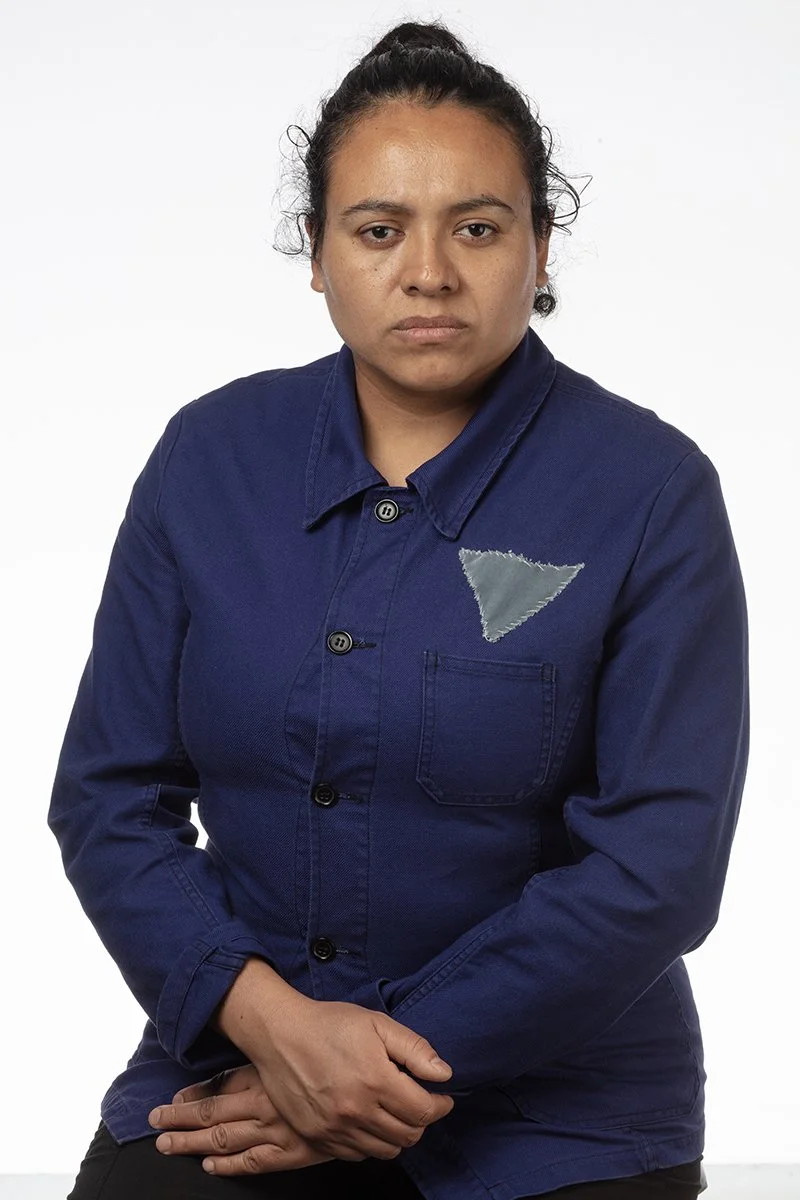
American Model addresses the reality that white supremacy, woven into the United States enterprise since its founding, is tearing the country apart, once again. After witnessing the January 6th attack on the Capitol I was struck by the similarities between historic racist ideologies and versions wielded by those in power today. Jim Crow Laws in America and the Nuremberg Laws originating in Germany—the latter directly inspired by the United States—simultaneously stripped childhood from my parents, though they lived worlds apart in Boston and Warsaw (Poland). Likewise, large swaths of Americans and immigrants, including countless children, are suffering under dehumanizing political tactics that deny their right to belong, develop and prosper.
“Every family narrative is rooted in history. The artifacts in these works dissolve the boundary between past and present. American Model exists to bring people together in order to share and learn from each other’s American stories and to stand in solidarity with the ever-growing populations under attack. Our country’s spectrum of faiths, cultures and blended future is not a vulnerability—it is America’s superpower. I cling to the hope that our country is not frayed beyond repair and that our shared humanity will ultimately stabilize and fulfill the American Experiment.”
- Robin Levy
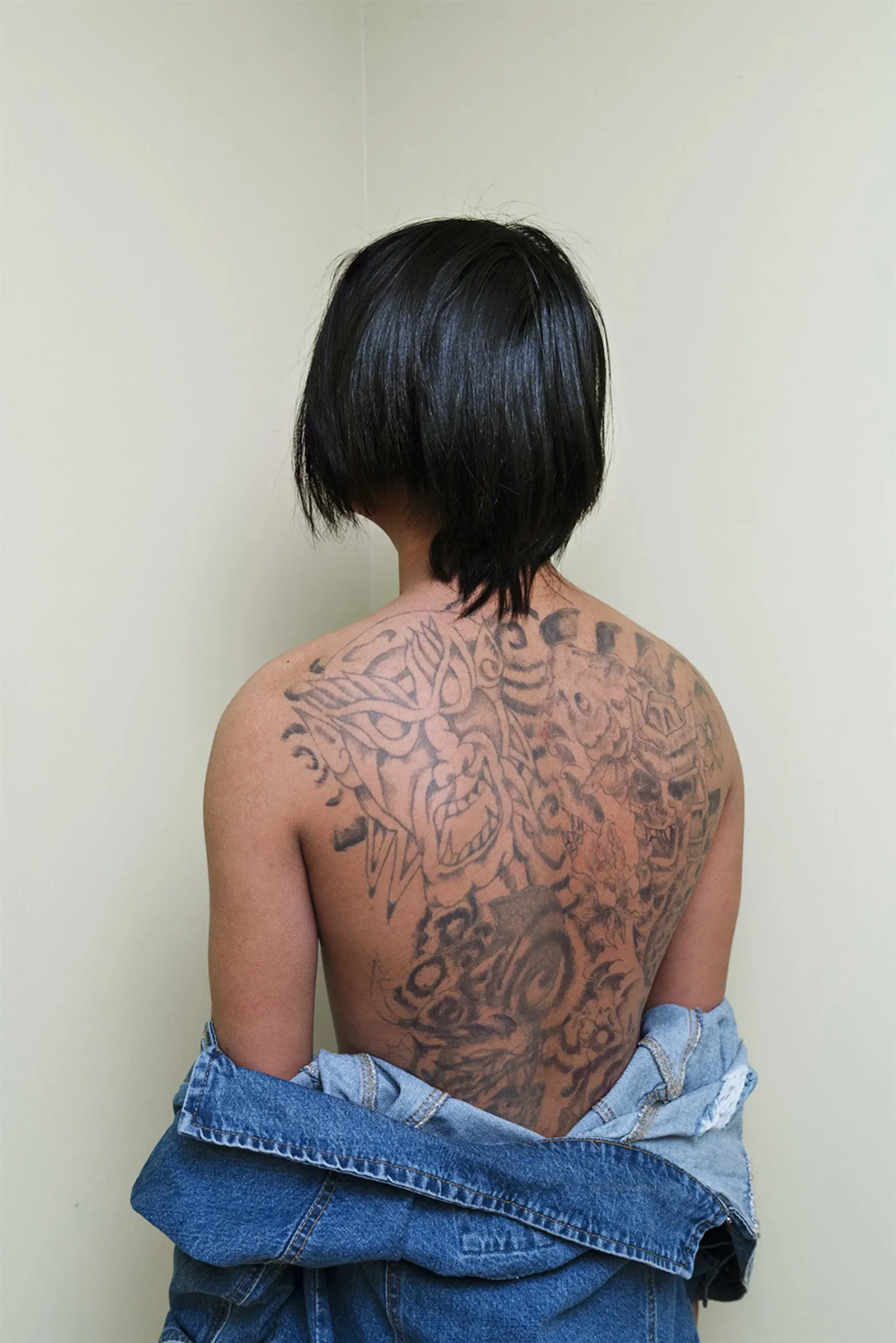
Jade Thirawas

Eyes Wide Shut examines the current societal issues that have greatly divided the United States of America. Poverty, homelessness, women’s rights, police brutality, systemic racism, illegal deportations, war on woke, DEI, and LGTBQ, rights which are destroying our humanity by dehumanizing the most vulnerable and needy of our society. The exhibits primary focus is to initiate a discourse in hopes of inspiring change.
Curated by Terrence Sanders-Smith & Bruce Q. Williams

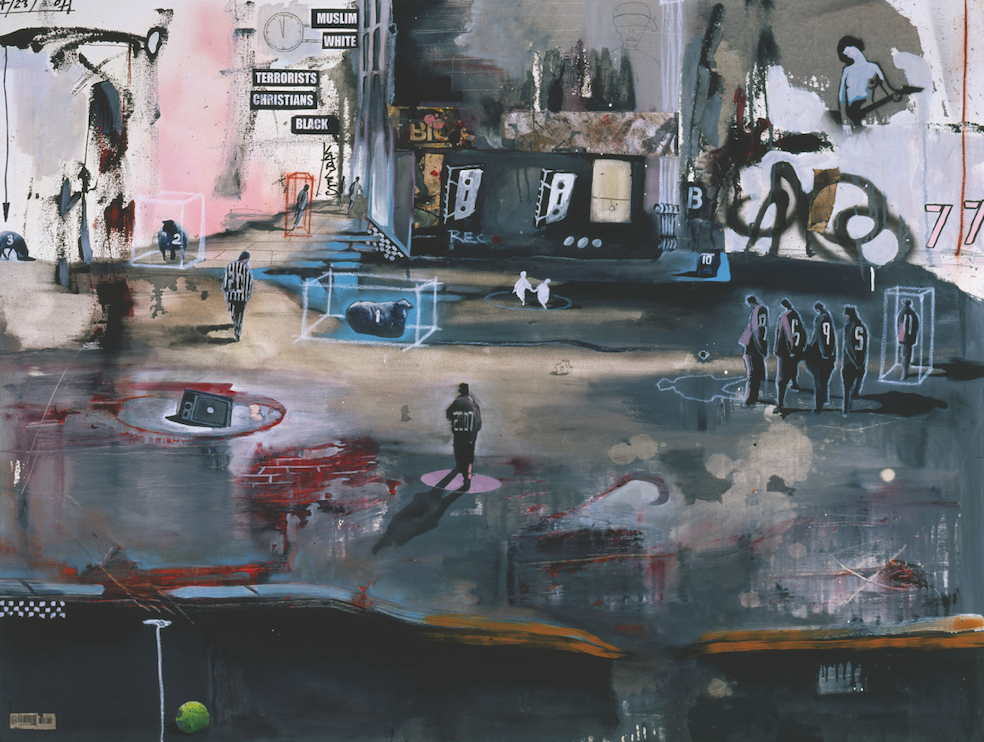
‘Casualties of Labels’
The TWO DECADES exhibition focuses on Jansen’s standout works from the Modern Expressionism period: 2000-2019. The works on exhibit are from the period between 2000 and 2019, Jansen's art can be defined as raw, socio-politically charged urban landscapes that merge elements of Abstract Expressionism and Graffiti. His work during this period translates as a visceral critique of society, influenced by his military experience and observations of what makes us human.



Lawrence Weiner
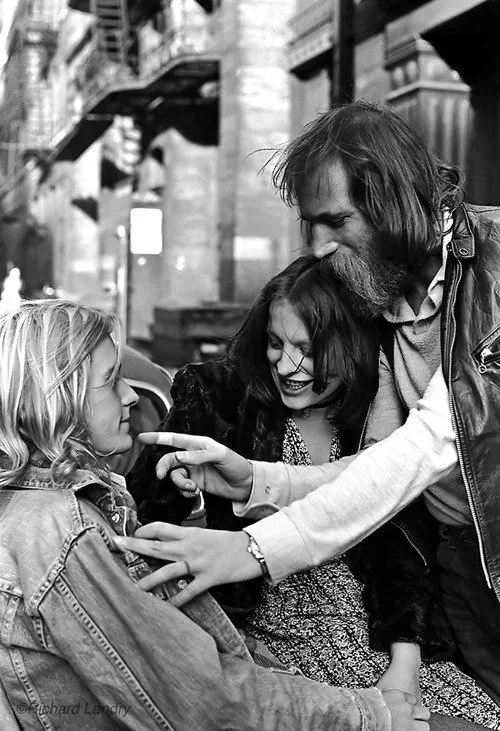
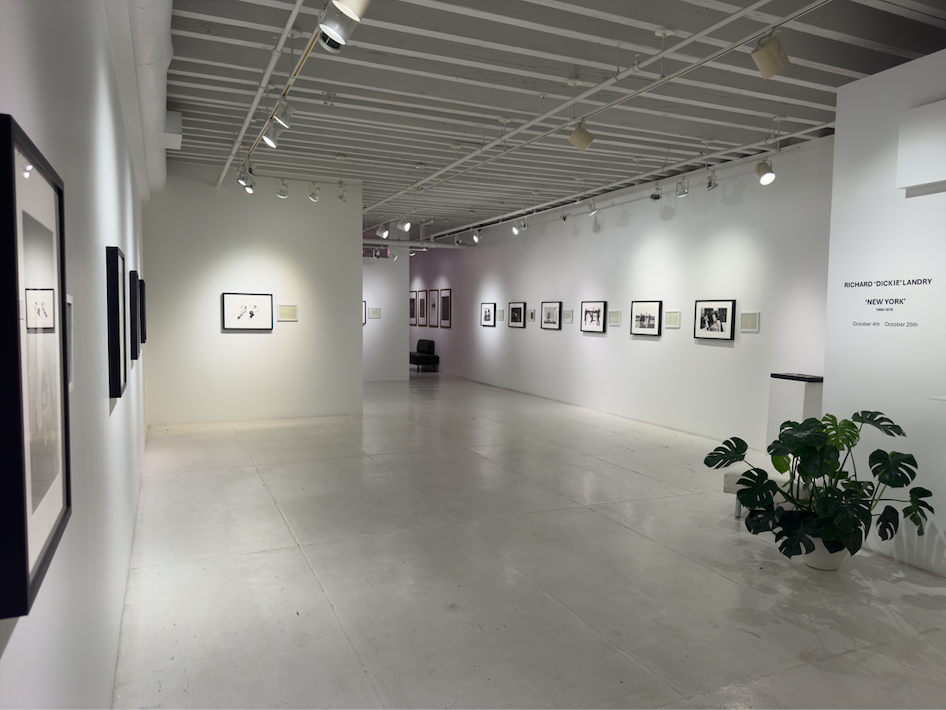
Richard ‘Dickie’ Landry (b.1938) is an accomplished musician and photographer. The avant-garde art scene in New York City was about to explode after a period of Abstract Expressionism and Pop Art. Landry soon fell in with a crowd of artists, musicians, dancers and theater people that included Keith Sonnier, Robert Rauschenberg, Gordon Matta-Clark, Robert Smithson, Michael Heizer, Walter de Maria, Steve Reich, Philip Glass, Laurie Anderson, Susan Rothenberg, Nancy Graves, Spalding Grey, Joan Jonas, Richard Serra, Mabou Mines, Chuck Close, Robert Wilson, Lawrence Weiner, Joseph Kosuth, Bruce Nauman, Trisha Brown, Deborah Hay, Mary Heilman and others who are now considered visionaries in their respective fields. It was at this time that Landry took up photography, not as an art form but simply to supplement his income. When not playing music, he would be hired by his newfound artist friends to help with their performances, installations and exhibits. He would ask if he could take pictures, not thinking of documenting anything – it was just a way to make extra money. He took his camera everywhere and became quite proficient at printing, using the same intense focus he would also apply to his music. Little did he know all these years later that he would amass a singular collection of photographs that would document the New York art scene of the 1970’s from a unique insider’s perspective.



James Macdonell (b. 1958, Lafayette, LA) graduated from Amherst College in January of 1980 with a bachelor of arts in English. As part of the Five College Consortium, he was able to study photography under Jerome Liebling, Elaine May, and Bill Arnold at Hampshire College, and printmaking under Barry Sease at Mount Holyoke. In 1976, James began working a summer job on the island of Captiva, FL for noted artist Robert Rauschenberg. For James, this marked the beginning of a transformative period that reshaped his perception, worldview, and aesthetic vision. He observed, firsthand, Rauschenberg’s processes; the technical dynamics of producing large integrated structural paintings (“combines”). Through assemblage, James understood the symbolism, interpreted the values, and developed a sense of order for his work. Their friendship and creative dialogue spanned more than three decades until Rauschenberg's death in 2008.



My first years were spent on the beaches of and near Coney Island. My family homes were in Seagate, a small private community adjacent to the boardwalk of Coney Island. I first began making art at three years of age. I built my first boat at twelve, and pulled debris together on the beach for my first larger scale constructions at 13. My father had a rare book store on 9th Street in Lower Manhattan, so I was familiar with the early development of the 10th Street art movement that became the foundation for American contemporary art. I first showed work in a 10th Street gallery, Brata, at 18. When I talked with another 10th Street artist, Joan Mitchell, she told me to “come back and see me when you have more experience”. We were both in a group show at the Tanager Gallery on 10th Street. The painter Pat Passlof invited me to become a member of the March Gallery in 1957, where I exhibited beach debris sculpture. I attended Pratt Institute on a G.M. scholarship, later taught art there as I earned my Masters of Fine Arts. My art at the time included wrapped objects, piled beach debris, and mop drawings. My teacher and mentor at Pratt, William Katavolos introduced me to the importance of the urban design and planning of cities.

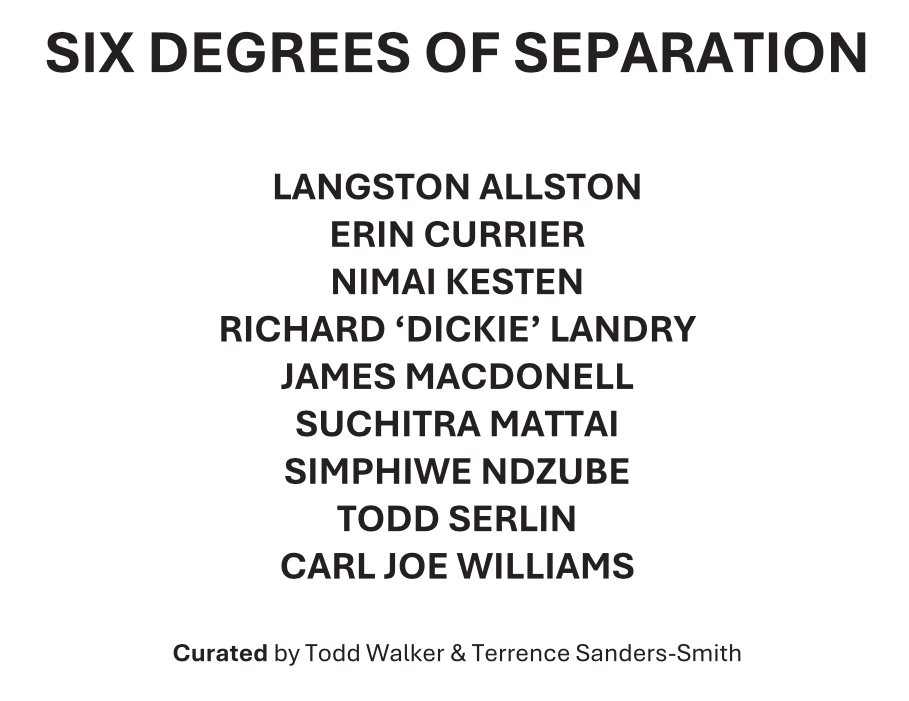

Six Degrees of Separation is a group exhibition about our collective humanity. As humans, and creatives, we must foster our respective humanity, and revere what makes our reality have purpose, significance and positivity. Six Degrees of Separation is an art exhibition that will resonate with everyone on different levels. Our hope is that the viewer sees a reflection of him or herself in every piece exhibited to feel a sense of community, hope and empathy. Six Degrees of Separation’s primary intent is that we have more in common with each other than our differences. That we are more connected, than detached. Six Degrees of Separation features the work of American, emerging, mid, and late career artists articulating the human condition.

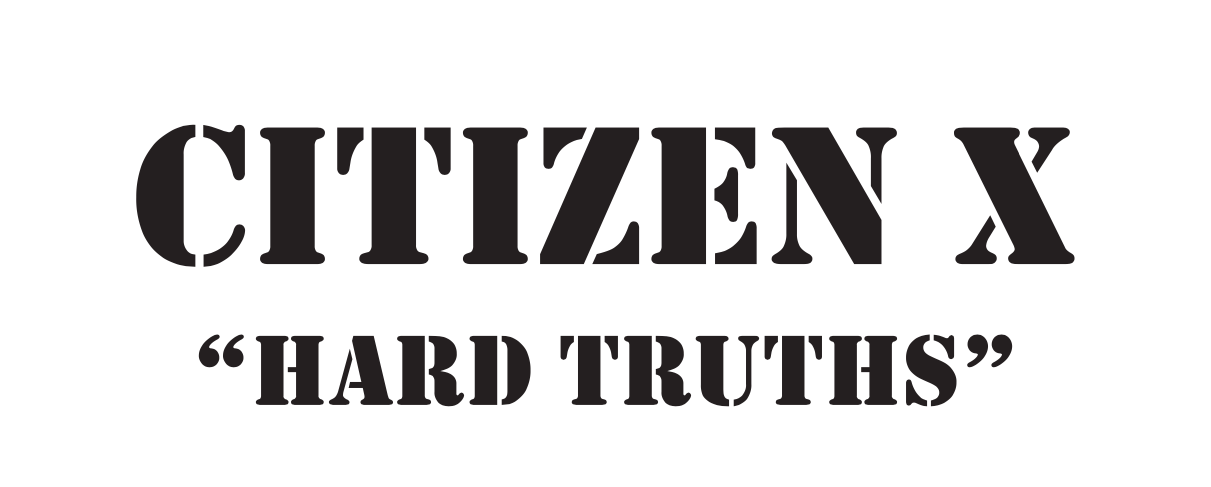

This was a classic street, guerilla, performance-art attack. Often presented as anonymous interventions, they are pointed, subversive, in-your-face, and they get attention. Although intervention by its very nature carries an implication of subversion, it is now accepted as a legitimate form of art. There is a history of intervention within the art world—famous examples include Robert Rauschenberg erasing part of a DeKooning drawing, or the Guerilla Girls shaming MOCA New York for its disgraceful disinterest in female artists. This kind of guerilla theatre shares its origins with political protest, such as Abbie Hoffman throwing dollar bills on the floor of the New York stock exchange; street theatre including agitprop, like the politically radical Bread and Puppet theatre or the bilingual El Teatro Campesino; poster campaigns such as Robbie Conal’s political images that delighted and confounded Los Angeles audiences; and more conceptual art happenings, such as the work of Allan Kaprow.
There is also the legacy of artists such as Barbara Kruger and Jenny Holzer, whose moral pronouncements appeared in public as posters and billboards and did shake things up. They reached beyond the arts community and made a difference in how people thought about themselves and the social structures they inhabited or unwittingly blundered into. Sometimes these actions happen with the tacit endorsement of those in power, as artist and institution co-opt the intervention and fold it into the mythos and commerce of contemporary practice. Citizen X seems determined to avoid the pitfalls of being co-opted, at least for the moment. Perhaps the most subversive act of all is to get inside the art world and change the corrupt and self-serving dynamics?
Citizen X remains anonymous because the nature of the work implies neutrality. If the personality of the artist becomes known and appears at the foreground, it telescopes messages that are biased and too easily dismissed by a numb public, utterly defeating the intention of the interventions, if meant to be honest, authentic, and proactive.
- By Clayton Campbell Former Co-Executive Director and Artistic Director of 18th Street Arts Center; Artist Residency Advisor to United States Artists; President of the International Association of Residential Arts Centers; and the first Director of the Joan Mitchell Center in New Orleans.

PAST EXHIBITION (POP-UP NYC)


Curated by Noah Becker (Whitehot Magazine) & Terrence Sanders-Smith (Artvoices Magazine)

PAST EXHIBITION (POP-UP NYC)
Curated by Alexander Venet, Noah Becker & Terrence Sanders-Smith
Bobby Neel Adams - ShinYoung An - Michael Anderson - Anita Arliss - Jessica Barroso-Gomez - Noah Becker - Johanna Breiding - Shannondoah Buckley - Clayton Campbell - Ori Carino - Joe Castro - Eteri Chkadua - Mike Cockrill - Marcia Cooper - Kenny Cole - Stephen Collier - Gregory De la Haba - Michelle Elmore - Donna Festa - Nicholas Galanin - Tatiana Garmendia - Jenne Glover - Ronald Hall - Randall Henry - Musa Hixson - Heidi Howard - Mike Jacobs -Marcus Jansen - Chris Justice - Stephanie Keith - Nimai Kesten - Bruce Keyes - Lali Khalid – Miru Kim -Maria Kreyn - Adam Krueger - Hayoon Jay Lee - Daniel Maidman - Jamie Martinez - Michael Massenburg - Shiri Mordechay - Rebecca Morgan - AJ Nadel - Alex Podesta - Robert Preston - Rajko Radovanovic - Terrence Sanders - Tom Sanford - Sol Sax - Cheryl Schainfeld - Satomi Shirai - Jamel Shabazz - Aaron Skolnick -Jansson Stegner - Lynn Stein - Dan Tague – Betty Tompkins - Sam Trioli - Jonathan Viner - The Citizen X.
“60 Americans is an anthology of the American condition, its collection of disparate identities serving as an example for what the entire world will eventually look like, if it hasn’t happened already.” – Jonathan Goodman Writer & Art Journalist
“Diego Rivera was celebrated because of social realism. When Rockefeller invited him to do frescos at Rockefeller center and Diego depicted the Soviet Revolutionaries. Rockefeller had the frescos removed. Rockefeller stopped supporting the socio-politically charged Social Realism and started supporting Abstract Expressionism. Today the rich are still trying to find safe art to invest their money in. ‘60 Americans’ is an exhibition featuring the dangerous images with a narrative that the wealthy attempt to avoid.” – Sol Sax Artist
“The basic premise is that real art and real artists can and should have the right to excel in a just society. Those real artists who take their work seriously and spend a lifetime working on their art become marginalized overnight through exhibitions dedicated to trends that revolve around this kind of shock and awe curating.” – Noah Becker Publisher & Editor-In-Chief of Whitehot Magazine


NEW YORK TIMES ART CRITIC ROBERTA SMITH STANDING NEXT TO HER FAVORITE PIECE IN THE 60 AMERICANS EXHIBITION. ARTIST RANDELL HENRY @THE 60 AMERICANS EXHIBITION OPENING.

